We are entering a critical period as the world accelerates investment in clean, reliable energy. According to the International Energy Agency, “more than 40 countries around the world have plans to expand nuclear’s role in their energy systems” and annual international investment in nuclear power may need to double to US$120 billion by 2030.
How will Canada invest further in this technology and win internationally?
Our decisions today will determine if Canada remains a nuclear leader and if Canadian workers, manufacturers, and innovators will capture a meaningful share of this growing global market.
Burgeoning interest in nuclear power makes sense. It offers an unparalleled solution to meet increasing electricity demand. Unlike many other zero-emission power sources, reactors reliably produce electricity in all weather and at any time of day, and they require relatively little land. With lifespans of 60 or 70 years, they offer economical lifecycle costs. And their supply chains can support energy independence.
So, as dozens of countries, including Canada, move quickly to expand nuclear power, they’re creating a wave of demand for the very technologies, components, and expertise in which this country already excels.
A distinct Canadian advantage is that Saskatchewan holds the world’s largest high-grade uranium deposits, making it one of the world’s key sources of nuclear fuel material. Much of that ore comes to Ontario to be safely processed into fuel for the reactors already providing more than half of the province’s electricity.
Canada also has a history of nuclear technology innovation and engineering prowess, including through internationally famous CANDU reactors.
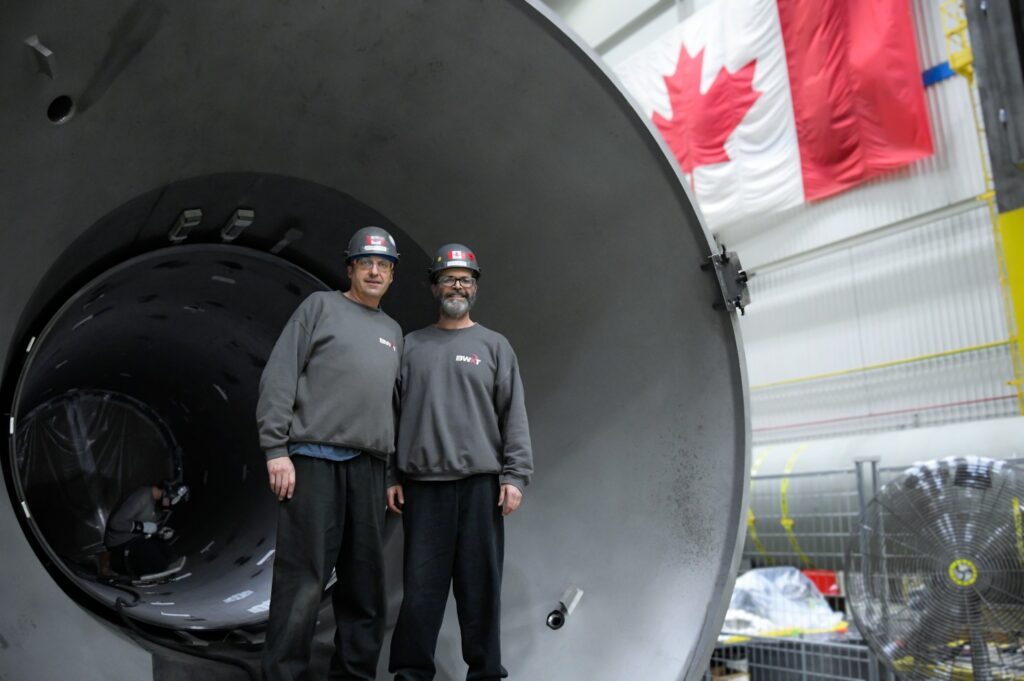
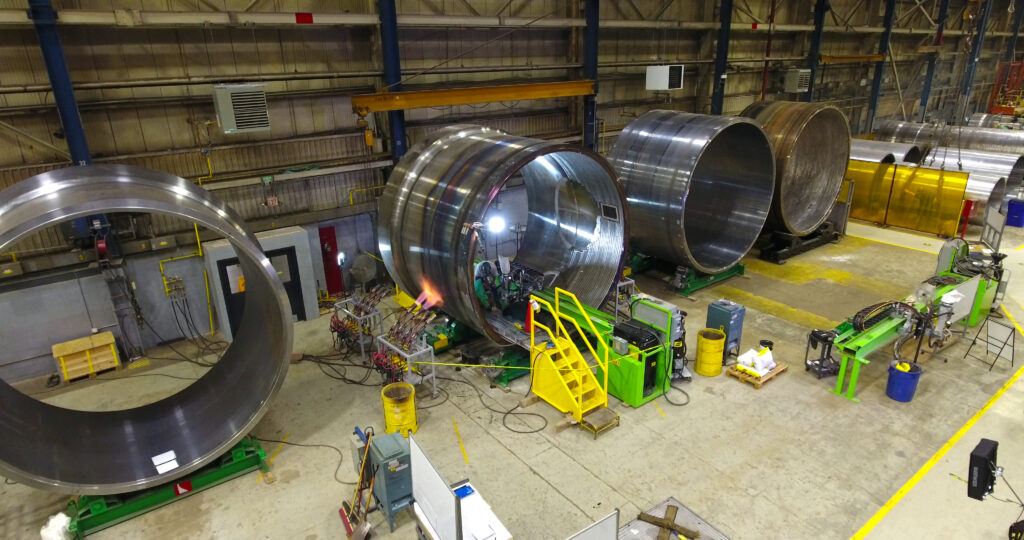
Moreover, Canada is already one of the leading nuclear reactor component manufacturers globally. Hundreds of Ontario-based engineers, welders, pipefitters, and others are participating in the refurbishment of their province’s nuclear power stations by building 48 steam generators for Ontario Power Generation and another 32 for Bruce Power. They’re also building the heavy container for the reactor core of the country’s first small modular reactor near Bowmanville, ON. In an age when we’ve all become accustomed to the loss of factory jobs, we’re seeing the nuclear industry expand its manufacturing capacity in southwestern Ontario.
Canadians’ next step is to harness their advantage for both domestic needs and global opportunities. Coordination among provinces is especially important as Alberta, Saskatchewan, Ontario, and New Brunswick move toward new nuclear construction, with each potentially adopting different technologies.
The cornerstone of Canada’s nuclear approach needs to be thinking in terms of fleets of nuclear power stations, not one-off projects. While the industry could deal with a patchwork approach to new nuclear projects, commonality in technology and design would provide greater policy certainty to the industry. It would also be the most efficient way to build nuclear power capacity, enabling the industry to develop assembly line-type production and increasing Canadian workers’ expertise in this technology. What’s more, fleet-size construction is the best way to attract new investment in Canada’s domestic nuclear supply chain.
In the meantime, Canada’s nuclear industry needs faster environmental and regulatory reviews for new projects. This would allow Canadian industry to pick up new work while still meeting properly stringent regulations on shorter timelines and at lower cost. Clean manufacturing tax credits remain an important way to recognize that nuclear power replaces carbon-intensive electricity, creating green jobs.
Strengthening Canada’s domestic nuclear industry will help meet our growing domestic energy needs. After all, Canadian electricity demand is projected to grow by 62% between 2025 and 2050, according to one conservative estimate.
A beefed-up nuclear industry also supports Canadian energy independence. We can build the power stations and components, as well as mine and process our own nuclear fuel domestically. Few other power sources offer such nation-building advantages.
Getting this right sets up Canadian workers to compete for and win tens of billions of dollars worth of work at home and abroad. It’s a chance to diversify our exports and markets with Canadian nuclear technology and components.
But industry can’t do it alone.
Governments, industry, Indigenous leaders, and other decision-makers must come together to leverage Canada’s nuclear advantages. With abundant, clean, and reliable electricity, as well as good jobs, the nuclear industry can drive even more economic prosperity.